PHC Biomedical Business Group Provides Products for Official Development Assistance (ODA)
Since entering the global market for laboratory equipment in 1980, the Biomedical Business Group has supplied products for Official Development Assistance (ODA) and United Nations projects in more than 50 countries worldwide. Our freezers and refrigerators are used not only in the healthcare field, but also in international projects related to education, agriculture, fisheries, and the environment.
In addition to our contributions to regional healthcare, PHC Group believes that its social mission is to make a sustained contribution to improve the health of society by providing essential equipment for the development of new therapies and pharmaceuticals around the world. By providing products that can be used with confidence even in developing countries, we are helping to improve medical and research infrastructure and the quality of life of communities around the world.
Examples of Product Supply Projects
Epidemiological Research on Viral Zoonotic Diseases in Sub-Saharan Africa
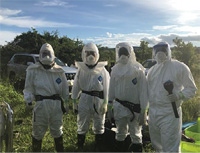 Photo courtesy of Hokkaido University
Building capacity for sustainable infectious disease response in Zambia and the Democratic Republic of the Congo by enhancing diagnostic and research capacities at core infectious disease institutions and supporting human resource development.
Ultra-low temperature freezers, CO2 incubators, biomedical freezers, pharmaceutical refrigerators, Blood Bank Refrigerators
Construction of the Royal Centre for Infectious Diseases in Bhutan
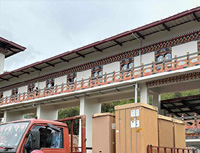 Photo courtesy of
Marubeni Protechs Corporation
Project to strengthen infectious disease control in Bhutan and build a sustainable disease response system through provision of medical equipment to the Royal Centre for Infectious Diseases
Ultra-low temperature freezers, CO2 incubators, biomedical freezers, pharmaceutical refrigerators
Construction Project for the Advanced Research Center for Infectious Diseases at the Noguchi Memorial Institute for Medical Research
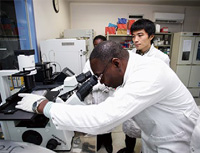 Photo courtesy of JICA
(photo by Akio Iizuka)
Construction of a new Advanced Research Center for Infectious Diseases and provision of equipment to advance its functions as a research, testing, and educational institution, thereby strengthening infectious disease response capabilities across West Africa.
Heated incubators, pharmaceutical refrigerators, and other equipment
Procurement of Education and Research Equipment for Egypt-Japan University of Science and Technology (E-JUST)
 Photo courtesy of JICA
Support for the provision of educational and research equipment in the field of engineering, promoting practical education based on experiments, hands-on training, and local talent who can contribute to the industrial and social development of Egypt
Biomedical freezers
Restoration of Mongolian Grasslands through Nomadic Traditional Knowledge
Project to select useful grassland plants based on the knowledge of nomadic communitiesand scientifically verified through component and genetic analysis, while efforts to restore degraded grassland ecosystems and the maintenance of livestock health.
Growth chambers, ultra-low temperature freezers, biomedical freezers, CO2 incubators
Forest Preservation in Bolivia
Support to identify current forest resource conditions and formulate management plans, contributing to sustainable forest management and promoting climate change countermeasures in the forestry field through greenhouse gas emissions reductions
Biomedical freezers
Employee Voices
In international cooperation projects, including ODA initiatives, it is important not only to respond accurately to local needs, but also to foster the self-reliance of local talent and ensure sustainability and effectiveness from a long-term maintenance and operational perspective. When I served as a member of the Japan Overseas Cooperation Volunteers, there were many situations where I benefited from medical equipment provided through such assistance amid limited resources, and I came to truly appreciate how much local communities are grateful for Japan’s support. From this experience, I truly hope that our company’s products will meet the needs of developing countries and can be used effectively and continuously in international cooperation. I believe that each of our efforts, accumulated one by one, can ultimately lead to the realization of a sustainable society.
Nachiko McIlroy
Marketing Division, Biomedical Business Group,
Life Sciences Business Unit PHC Corporation
Tackling Zoonotic Diseases in Africa
More Than 40 Years of Collaboration Between Hokkaido University's International Institute for Zoonosis Control and the University of Zambia of Veterinary Medicine to Address a Global Challenge
Viral zoonotic diseases, including Ebola hemorrhagic fever and avian influenza, infect both animals and humans and pose serious health risks worldwide. In particular, the major Ebola outbreaks that occurred in West Africa from 2013 to 2016 claimed more than 10,000 lives, renewing recognition of the importance of diagnostic systems capable of responding rapidly to infectious diseases and sustained research infrastructure.
To address this global challenge, Hokkaido University in Japan and the University of Zambia have worked to strengthen infectious disease control in Africa through joint research for more than 40 years. Their base of activity, the School of Veterinary Medicine at the University of Zambia, has received technical cooperation from Hokkaido University researchers since its establishment in 1985 through Japanese grant aid, supporting the development of research infrastructure and talent. Various projects have been continuously implemented locally with the support of Japan’s Ministry of Education, Culture, Sports, Science and Technology and Ministry of Foreign Affairs.
We spoke with Professor Ayato Takada, the project leader, and Associate Professor Masahiro Kajihara, a collaborating researcher, about their research projects on the epidemiology of viral zoonotic diseases in Africa. These projects, conducted from 2019 to 2024, sought to establish and further advance diagnostic technologies while enhancing the research and testing capabilities of local researchers.
Identification of Virus-Carrying Wildlife――What kind of research are you conducting in Zambia?
- Prof. Takada:
- We are researching zoonotic diseases such as the Ebola virus. These infectious diseases arise when a virus carried by wild animals is transmitted to humans. Because of this, it is difficult to control the spread of disease based solely on human behavior, and it is crucial that we identify the natural hosts of the virus. At this time, bats are a likely candidate, and we are collecting blood and organ samples from individual specimens gathered locally and conducting genetic analysis. So far, we have tested more than 1,000 bats. We are also working to develop diagnostic methods and have developed a rapid diagnostic kit for Ebola virus antigens. The kit can be stored at room temperature and does not need electricity or specialized equipment, so we expect that it can be used in regions with inadequate medical infrastructure.
-
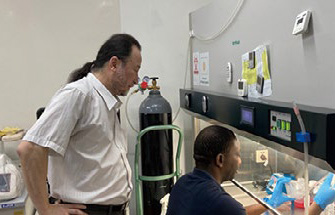 (Left) Professor Ayato Takada
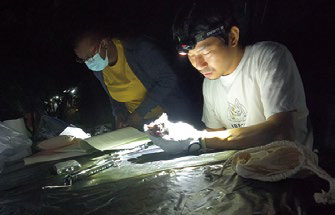 (Right) Associate Professor Masahiro Kajihara
PHCbi Products Supporting This Research――The University of Zambia School of Veterinary Medicine has used PHCbi products since the lab was established. How are these products used?
- Associate Prof. Kajihara:
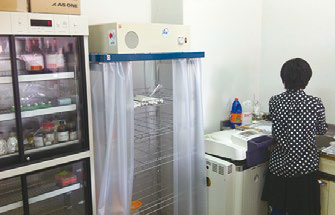
- PHCbi products are easy for local staff to use because the English labeling and instructions are clear and intuitive. Its pharmaceutical refrigerators are used to store reagents and culture media, while CO2 incubators are used to culture cells. Biomedical and ultra-low temperature freezers are essential for preserving PCR reagents and samples collected locally. Storage at −80°C in particular plays a key role in maintaining the activity of viruses and cells.
-
- Prof. Takada:
- There can be frequent power outages in Zambia, so emergency power sources are used, but this can lead to equipment failures, which means there is a risk of losing samples and research results. It is not easy to get equipment repaired or obtain replacements, so durability is an essential factor. For that reason, we place strong trust in Japanese products represented by PHCbi.
Results of Human Resource Development――What do you see as the key outcomes of this project?
- Prof. Takada:
- In addition to the research results themselves, the biggest outcome has been talent development. Through our joint research and foreign study programs over many years, we have helped to increase the number of researchers in Zambia with advanced technical skills in this field. Now, a cycle is emerging where those researchers are developing the next generation of talent. It is precisely because this foundation existed that the University of Zambia could play a critical role as the sole domestic institution technologically capable of conducting genetic diagnosis at the time of the 2014 Ebola outbreak. Based on those results, the university was designated by the Zambian government as a testing institution during the COVID-19 pandemic.
- Associate Prof. Kajihara:
- In the past, people aspiring to become researchers often had few choices but to pursue opportunities abroad, but today an environment is gradually being established that allows them to continue their research within Zambia.
Addressing Global Challenges――What is your outlook for the future of zoonotic disease research?
- Associate Prof. Kajihara:
- We are working on new methods for disease monitoring and prevention, including research to track the behavior of bats. I believe that linking viral behavior with animal ecology will make more accurate disease forecasts possible.
-
- Prof. Takada:
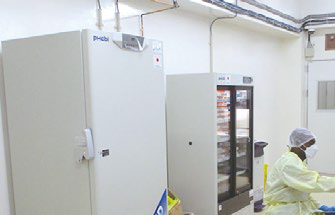
- In addition to Zambia, this project is also moving forward in the Democratic Republic of Congo and other neighboring countries. Following the declaration of an mpox outbreak in the DRC in 2021, research on the mpox virus has been conducted at the Central Veterinary Laboratory and National Institute of Biomedical Research in the DRC. We secured the genetic material used for PCR diagnostics and provided technical guidance with a view to supplying neighboring African countries as well. As a result, it has become possible to isolate the virus from clinical specimens and conduct genetic analysis locally. These capabilities are expected to be used in the future development of diagnostic and therapeutic methods. Infectious diseases are a cross-border issue, and solutions cannot be achieved by protecting only one’s own country or certain countries. I hope more people will come to view and address these challenges from a global perspective.
Profile of Professor Takada
Professor and Director of the Hokkaido University International Institute for Zoonosis Control. Visiting Professor at the University of Zambia School of Veterinary Medicine. Specializes in virology and is a leading authority on Ebola virus research. He is also engaged in public outreach, communicating his research findings through his book Virus is Rogue? and appearances on television documentary programs including Passionate People and The Professionals.
Profile of Associate Professor Kajihara
Associate Professor at the International Institute for Zoonosis Control, Hokkaido University, and Visiting Professor at the School of Veterinary Medicine, University of Zambia. Specializes in virology and veterinary medicine. His research focuses on elucidating zoonotic infectious diseases through investigations of bat-derived viruses and field research in Africa. He also engages in outreach activities in Japan and internationally, including presentations at the GHIT R&D Forum, to share insights gained through his research.